
If you were born in November, you get two birthstones: topaz and citrine. Both can glow in the golden tones of late autumn, which is exactly why people mixed them up for centuries. They are different minerals, though, and they wear and clean differently. Here is what to know about each one, from its history to keeping it bright at home.
A shared history of mistaken identity
Before modern gemology, golden stones were easy to confuse, and citrine was often sold or described as topaz. That is why the two share so much folklore today. Topaz is the traditional November stone, and citrine joined it later as a modern alternative.
Topaz
The origin of the name is debated. Some trace it to the Sanskrit tapas, meaning fire, and others to the Greek topazos.
Topaz comes in more colors than most people expect: colorless, light blue, yellow, orange, pink, violet, brown and, very rarely, red. The most storied is Imperial topaz, a pinkish orange gem. Its name has two competing origin stories:
The Russian story: the royal family supposedly kept the finest colors from the Ural Mountains for themselves.
The Brazilian story: the name dates to 1881, when Emperor Pedro II visited Ouro Preto and received a reddish topaz as a gift.
Brazil's Minas Gerais has been mined for quality topaz for more than two centuries, and it remains one of the most important sources.
Citrine
Citrine is the yellow to brownish orange variety of quartz. Its name likely comes from citron, the French word for lemon. It has been reported in Roman jewelry, and it was especially popular in colorful Scottish jewelry of the Victorian era, including kilt pins and brooches. Queen Victoria's love of Scotland helped its fashion along. It returned to favor in the Art Deco years, when bold cocktail rings and big golden stones suited the mood.
Citrine also has one of the best mine stories in the gem world. Bolivia's Anahí mine was reportedly discovered by a Spanish conquistador in the 1600s, then given to him as a dowry when he married a princess named Anahí. It was lost for three centuries and rediscovered in the 1960s. The same mine produces ametrine, a single gem with both purple amethyst and golden citrine in it.
Natural citrine is rare. Most citrine you will see today began as amethyst and was heat treated to its golden color.
What the stones have meant
Both stones are tied to calm, fortune and warmth, though these are traditions and beliefs rather than proven properties. They are a lovely part of why people choose a birthstone.
Strength: the ancient Greeks believed topaz gave them strength.
Protection and calm: from the 1300s to the 1600s, Europeans thought topaz could thwart magic spells and dispel anger.
Long life: in India, many have long believed that topaz worn above the heart brings long life, beauty and intelligence.
A soothed temper: because it was mistaken for topaz, citrine picked up the same reputation for calming the wearer.
Prosperity: citrine is nicknamed the merchant's stone, since its golden color was thought to attract wealth.
They also mark milestones. Blue topaz is the gem of the fourth wedding anniversary, citrine the thirteenth, and Imperial topaz the 23rd.
How to wear them
The short version: citrine is the easier everyday ring stone, and topaz is happiest in a protective setting or a piece that sees less wear.
Topaz
Topaz is hard, but hardness is not the same as toughness. It has a natural plane of weakness called cleavage, so a sharp blow can split it. That shapes how we would wear it:
Pendants, earrings and pins are ideal, since they rarely take a knock.
Rings can work with a protective setting. A bezel, which wraps metal around the stone's edge, gives more protection than high, open prongs.
Blue topaz looks crisp in white metals, and it is an affordable way to wear a big, bright blue.
Imperial and golden topaz glow in yellow or rose gold.
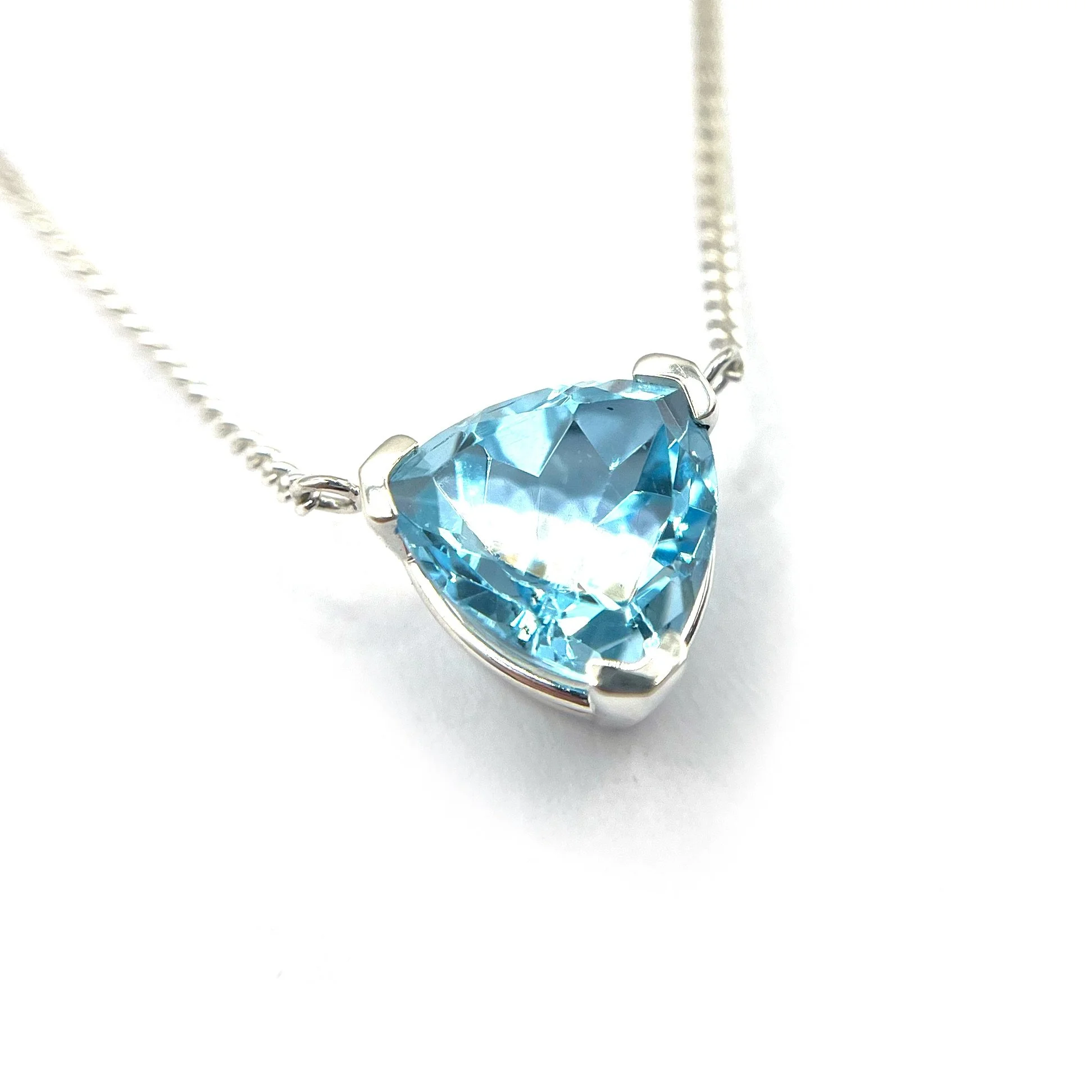
Topaz and Sterling Silver Necklace
Citrine
Citrine has good toughness and suits all kinds of jewelry, including rings. It comes in generous sizes at friendly prices, so it makes a great statement stone.
Cocktail rings are a natural fit and a nod to its Art Deco heyday. Choose a slightly protective setting if you wear it daily.
Yellow gold deepens its warmth, while silver or white gold gives a brighter contrast.
Layered colors work well too. Try it with amethyst, its quartz cousin, or choose ametrine to get both colors in one stone.
Can't choose? Wear both. Golden tones of each sit happily together in a stacked set or a cluster pendant.
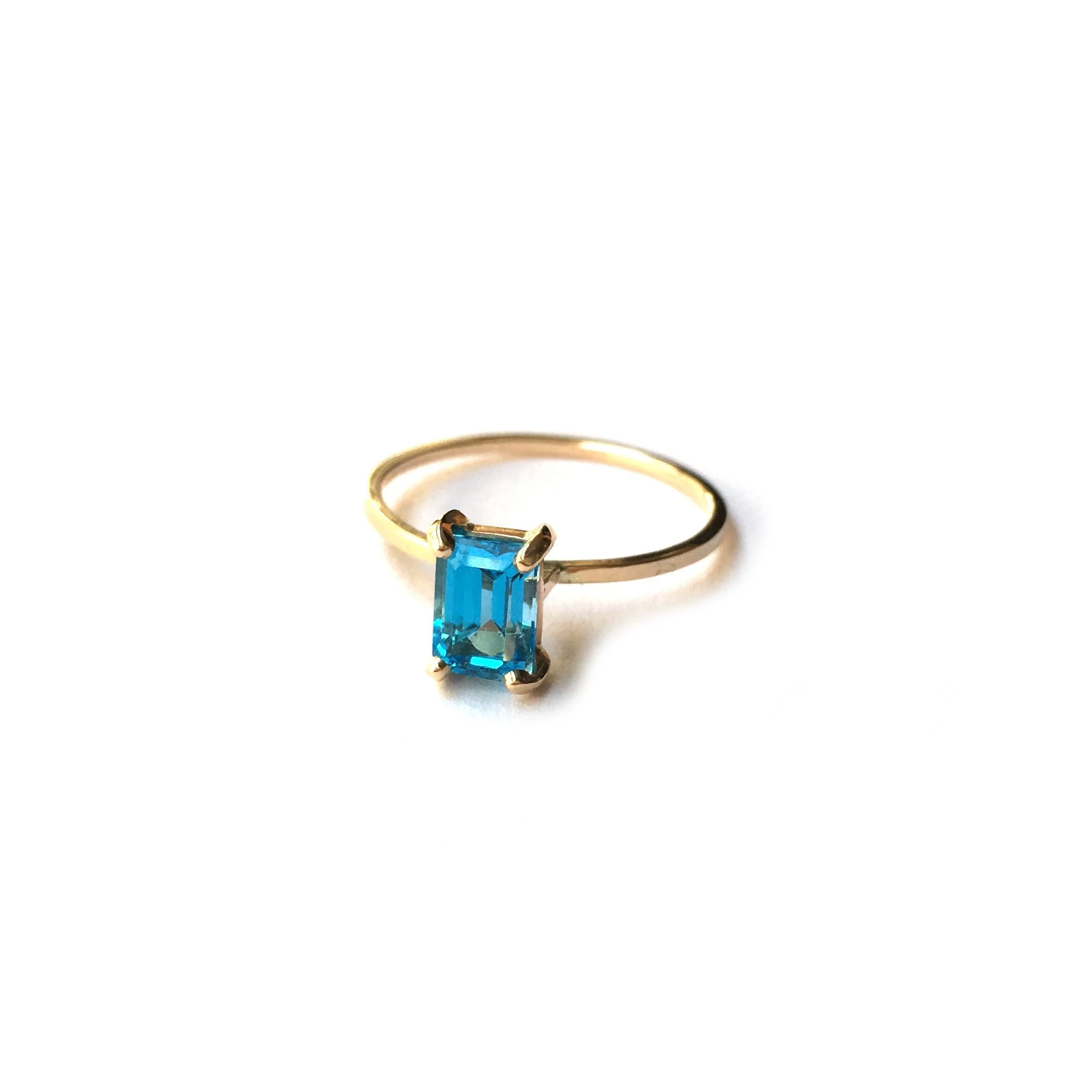
Topaz and yellow gold ring
How to care for them
Warm, soapy water and a soft brush are safe for both stones. Beyond that, they need different handling.
Topaz: It rates 8 on the Mohs hardness scale, but its toughness is poor because of its cleavage. Avoid ultrasonic and steam cleaners. Hard blows and sudden temperature changes are the main risks, and prolonged heat or sun can fade some yellow to brown stones.
Citrine: It rates 7 on the Mohs scale and has good toughness. Ultrasonic cleaners are usually safe unless the stone is dyed or fracture filled, but avoid steam. Scratches and sudden temperature changes are the main risks, and prolonged intense light can fade some stones.
A few habits will keep either stone looking its best:
Take it off for chores, sports and the gym. A knock can split topaz. Citrine scratches more easily than you might think, because household dust and sand are mostly quartz, the same mineral.
Avoid sudden heat. Keep both away from hot sinks, saunas and sunny windowsills, and let them cool gradually.
Store pieces separately in a soft cloth or padded box, so harder stones do not scratch softer ones.
Be gentle with Mystic topaz. Its rainbow effect is a thin surface coating, so use only mild soap. Abrasive cleaners and buffing wheels will remove it.
Tell your jeweler what it is before any repair. Heat from a torch can damage both stones, so they may need to come out of the setting first.
See a jeweler twice a year. A professional cleaning and inspection will catch worn prongs before a stone goes missing.
Most blue topaz is treated from colorless topaz with irradiation and heat, and most citrine is heated amethyst. Both results are stable under normal wear, so there is no special care needed for that.
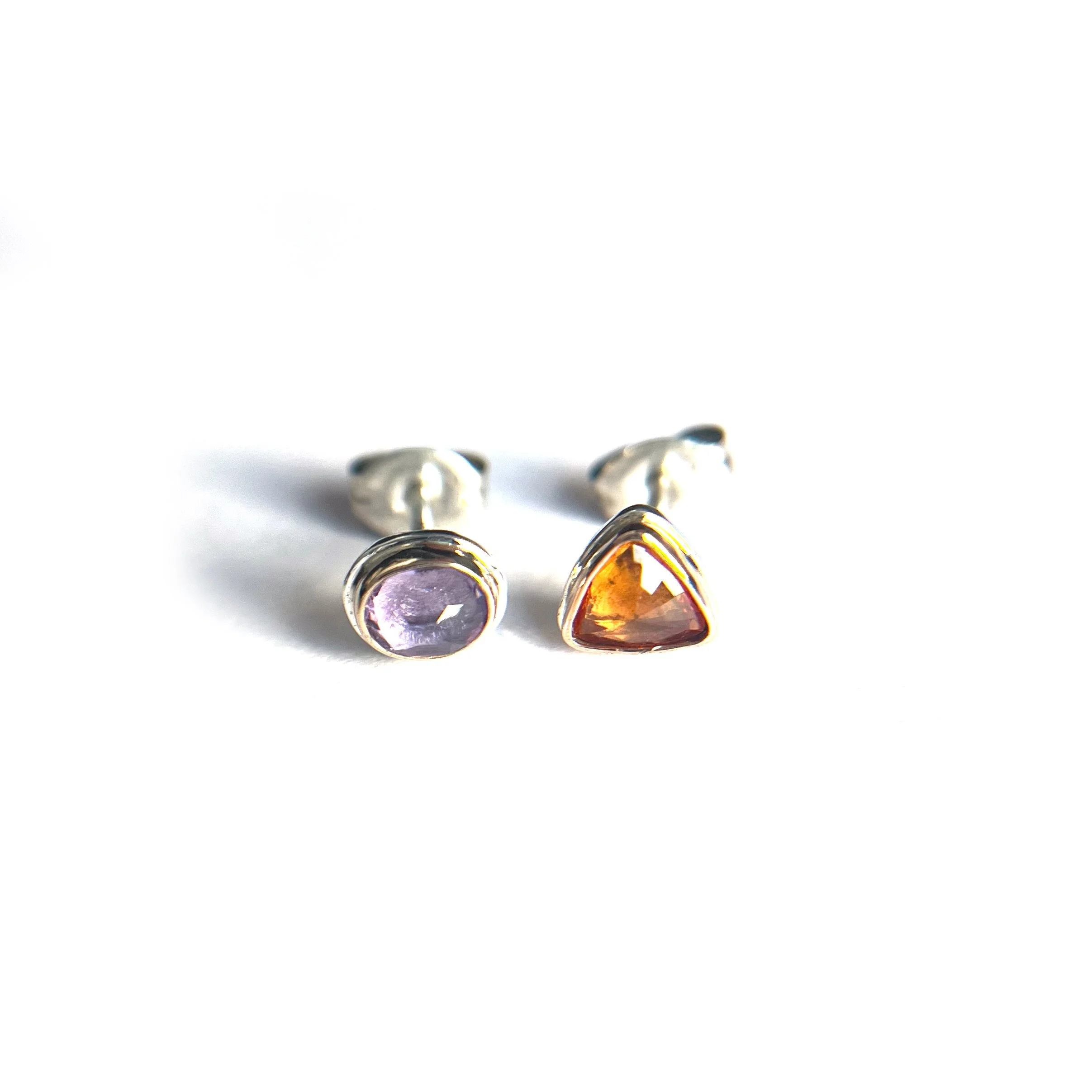
Citrine and Amethyst in 14k yellow gold and sterling silver earrings
Find your November stone
Whether you love the fire of Imperial topaz or the sunny glow of citrine, the right stone is the one you will reach for every day. At Seattle Jewelry Design & Repair, we would love to help you design a November piece, reset a stone you already own, or check that a favorite is still secure.

Hey there, I’m Nina!
I’m a Seattle-based jeweler specializing in custom designs, heirloom restorations, and thoughtful repairs, all done by hand, start to finish, right here in my studio. Every piece I work on carries a story, and I take pride in preserving that story through craftsmanship, care, and attention to detail.
Whether you’re dreaming up a one-of-a-kind creation, bringing new life to a family treasure, or simply fixing a favorite everyday piece, my goal is to make the experience personal, collaborative, and meaningful.
If you have an idea, or even just a feeling, about what you want, let’s bring it to life together.
